Children in India’s tea gardens
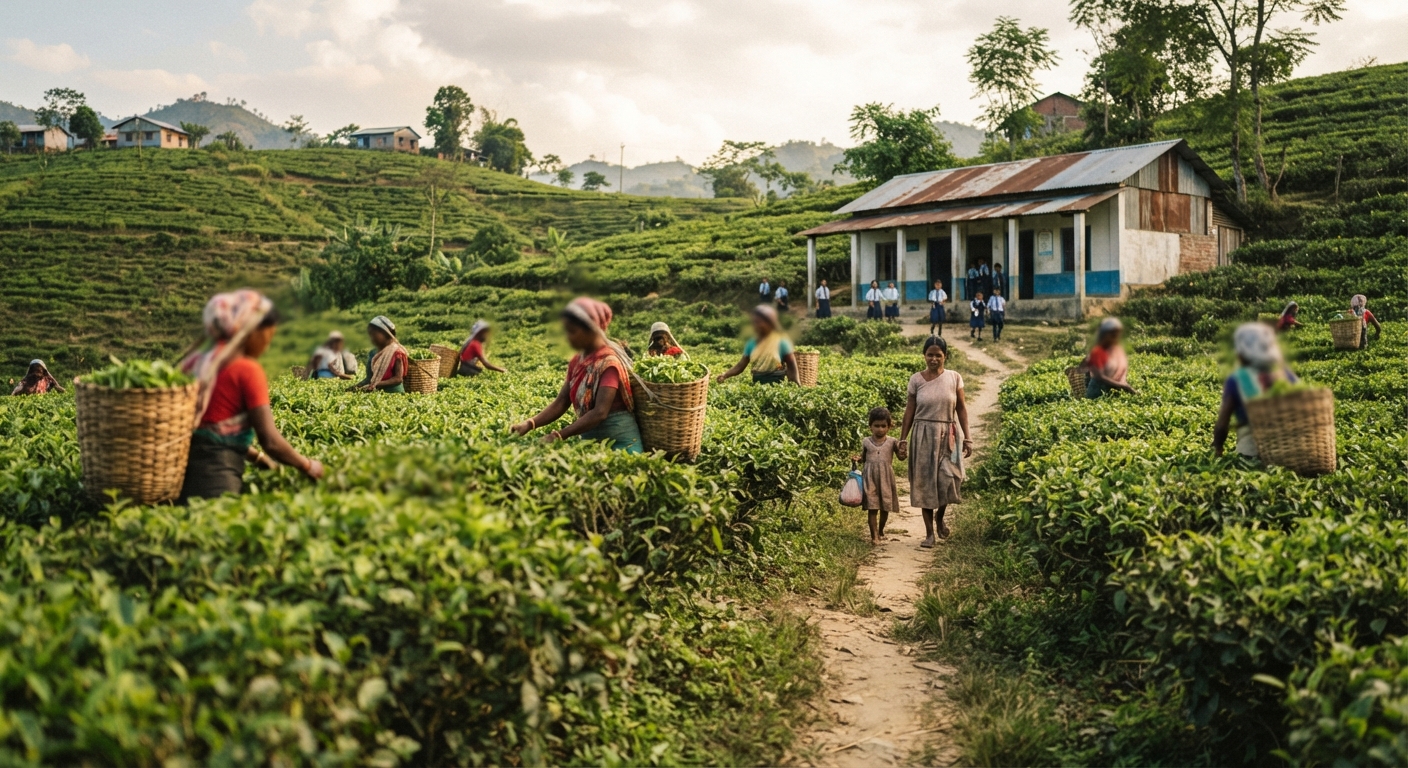
Indian tea is known all over the world. But behind the green hills and the fragrant cups, many of the families who pick the leaves live in poverty and isolation. For their children, this often means that school is out of reach.
Childhood among the tea bushes
Tea gardens are typically located far from towns and roads. Families live on the estate itself, where parents work as daily wage labourers for very low pay. When income barely covers the bare necessities, every pair of hands counts. Many children therefore help out, whether in the garden, at home or by looking after younger siblings, instead of sitting in a classroom.
Even where a school exists, it is often far away, understaffed or of poor quality. After the first few grades, distance becomes a new barrier. Transport is rarely available, and parents who have had little schooling themselves may find it hard to see where an education will lead when the only work waiting afterwards is on the estate.
Girls are hit hardest. When they drop out of school, the risk of early marriage and exploitation rises. And mothers, who have often never had the chance to learn to read, rarely have the tools to break the cycle.
This is not a matter of indifference. Families want the best for their children, but daily life leaves no room for it.
Parinaama: learning right next to the children
This is where Parinaama steps in: in tea gardens, tribal belts and forest-fringe villages that the public school system does not reach. Today the organisation runs more than 40 learning centres across 6 Indian states and 25 districts.
At the core is foundational literacy and numeracy through play-based learning led by trained Shiksha Saathis from the local community. Each child is assessed by competency rather than age, so no one is left behind for starting late. Parinaama also offers English language labs for older children and young people, climate education, and sports for development, where kabaddi, football and athletics build confidence, discipline and gender equity. At Parinaama, sport is not an extra. It is part of education.
The work also includes mothers: around 30,000 mothers have seen their earnings increase. In total, Parinaama has reached more than a million people, 89% of students are fully literate, and 81% of funds go directly to programmes.
Fourteen-year-old Saraspati, from a tea garden community, sums up what Parinaama stands for in a single sentence:
“When I read, I feel smart. When I play, I feel strong. I want to be both.”
Ethos as Danish partner
Ethos is Parinaama’s Danish partner and helps bring the organisation’s work to more people in Denmark. Together, we work so that children, young people and mothers in India’s most isolated communities get the same opportunities as everyone else: the right to learn, grow and lead.